

The Gadflies (Part 1/2)
When Bristol Beauforts Harassed the Kriegsmarine


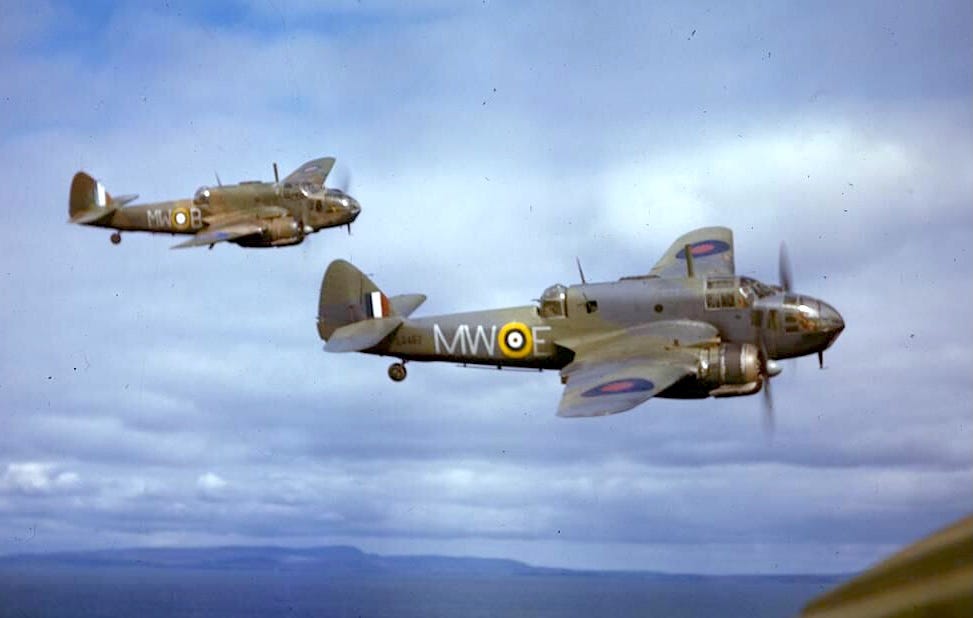
The Bristol Beaufort is one of the many unjustly forgotten aircraft of the Second World War. Sleek fighters and monstrous bombers have secured a place in collective memory through epic duels and spectacular images of devastating firepower. The Beaufort, by contrast, left little obvious trace. The blame probably lies with its highly technical missions, its rather ungainly silhouette, and the fact that it was followed by much better-designed successors. Yet it more than pulled its weight. In 1940–41, the Beaufort proved its worth in anti-shipping operations through several notable exploits. Here are the main ones. Like flies buzzing in the Germans’ ears.
In the summer of 1935, the British Air Ministry issued specifications for two types of aircraft required by the Royal Air Force. The first was a three-seat coastal torpedo-bomber; the second was to be a land-based general-purpose reconnaissance aircraft with a crew of four. The following year, the two projects were merged, the Air Ministry judging that industry could develop two all-metal twin-engined aircraft with different roles from a common airframe. In reality, the idea came from Bristol, one of the manufacturers shortlisted, which had already been working on such a design. The requirements included the ability to carry either a 2,000 lb (900 kg) bomb load or a torpedo to an altitude of 1,500 m over a distance of 800 km, or a “reconnaissance” load of 500 lb (227 kg) of bombs at 322 km/h on the same radius of action. The aircraft also had to be stable in a dive and highly manoeuvrable. In the spring of 1936, the Blackburn and Bristol designs were both selected for series production.
On paper, there was little to distinguish the two competing aircraft, which both met the formal requirements. Blackburn’s B-26 Botha was ordered in 1,256 examples, while Bristol received an initial order for only 426 of its Type 152, later named Beaufort in honour of a highly respected duke of the British aristocracy. The Beaufort featured a glazed nose, a ventral bomb bay, a reasonably spacious cockpit for four aircrew (two pilots, a radio operator and a gunner), and a rear turret. The design was finalised in 1937, but that July Bristol received permission to replace the originally specified Perseus engines with the more powerful Taurus. Teething problems with the powerplant, the cooling system, and the aircraft’s overall stability took longer than expected to sort out, and the Beaufort was not truly “mature” until 1940. Even then, results were mixed: bombing trials at 3,000 m and 383 km/h were decidedly mediocre, with one test pilot describing the Beaufort as “an exceptionally poor bombing platform, subject to excessive and continuous rolling which makes estimation of drift particularly difficult.”
Within the already crowded British torpedo-bomber family tree, the Beaufort thus found itself squeezed between the less capable but still serviceable Blenheim and the very promising Beaufighter already in development. In short, it was regarded as a second-tier torpedo-bomber whose career should have been brief, had it not been for two external factors: the war, and the failure of the Botha. When hostilities broke out in September 1939, the RAF had more or less decided to send the Beaufort to the Far East to replace obsolete Vickers Vildebeest biplanes, while the Botha was intended to supplant the Avro Anson in home-based squadrons. At the same time, RAF officers were increasingly alarmed by the Blackburn aircraft’s chronic under-powering, which severely limited its bomb load and range—just as the general trend was toward higher all-up weights due to extra instruments and weapons. Between 1937 and 1940, the Beaufort’s maximum take-off weight grew from 7.9 to 9.5 tonnes, made possible only by re-engining. The Botha never received that remedy.
In the end, the Beaufort proved very stable at low altitude, fast and reliable, and above all remarkably tough: it could absorb a great deal of damage and still bring its crew home. The decision was made to restart Beaufort production to equip several squadrons, most of them in Australia but some based in Great Britain.
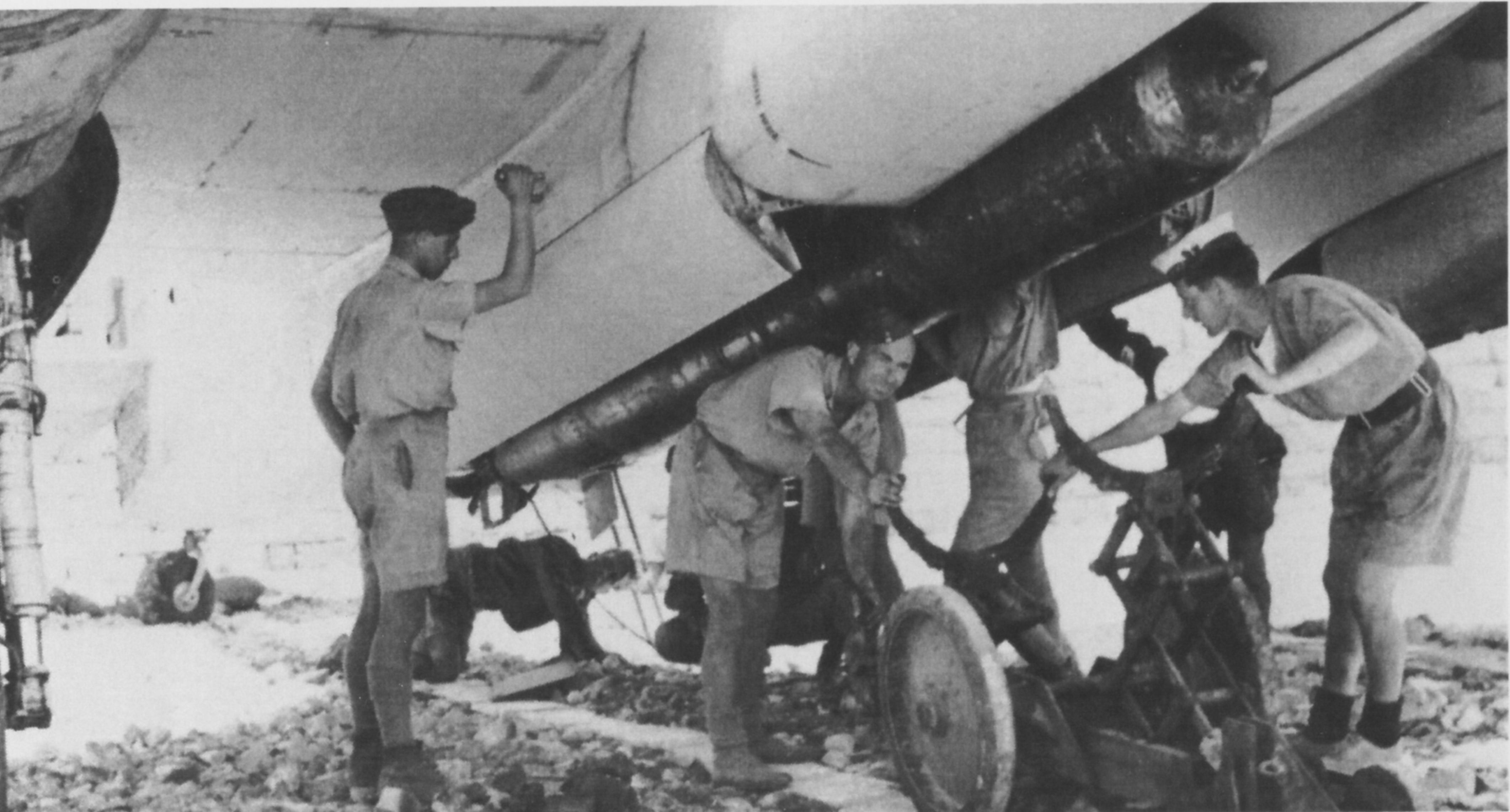
Production was facilitated by building the aircraft in subassemblies and then bringing them together for final assembly—a flexible system that allowed wide use of subcontractors for specific sections, while simplifying maintenance. The airframe was all-metal except for the wooden bomb-bay doors and the framework of the rear turret. The crew compartment was relatively spacious thanks to a low, semi-external bomb bay: because it was not large enough, the ventral bay had to remain open when it contained a torpedo. Trials soon showed that dropping a torpedo at high speed produced trajectories that were far too erratic. To better control its fall before it hit the water, a detachable wooden tail unit was added—but this meant the torpedo no longer fitted completely into the 8 ft 4 in (2.54 m) long bay with its nose pointing downward. Hence the characteristic Beaufort arrangement with the torpedo pointing upward and its tail protruding slightly, contrary to the usual configuration on other torpedo aircraft of the time.
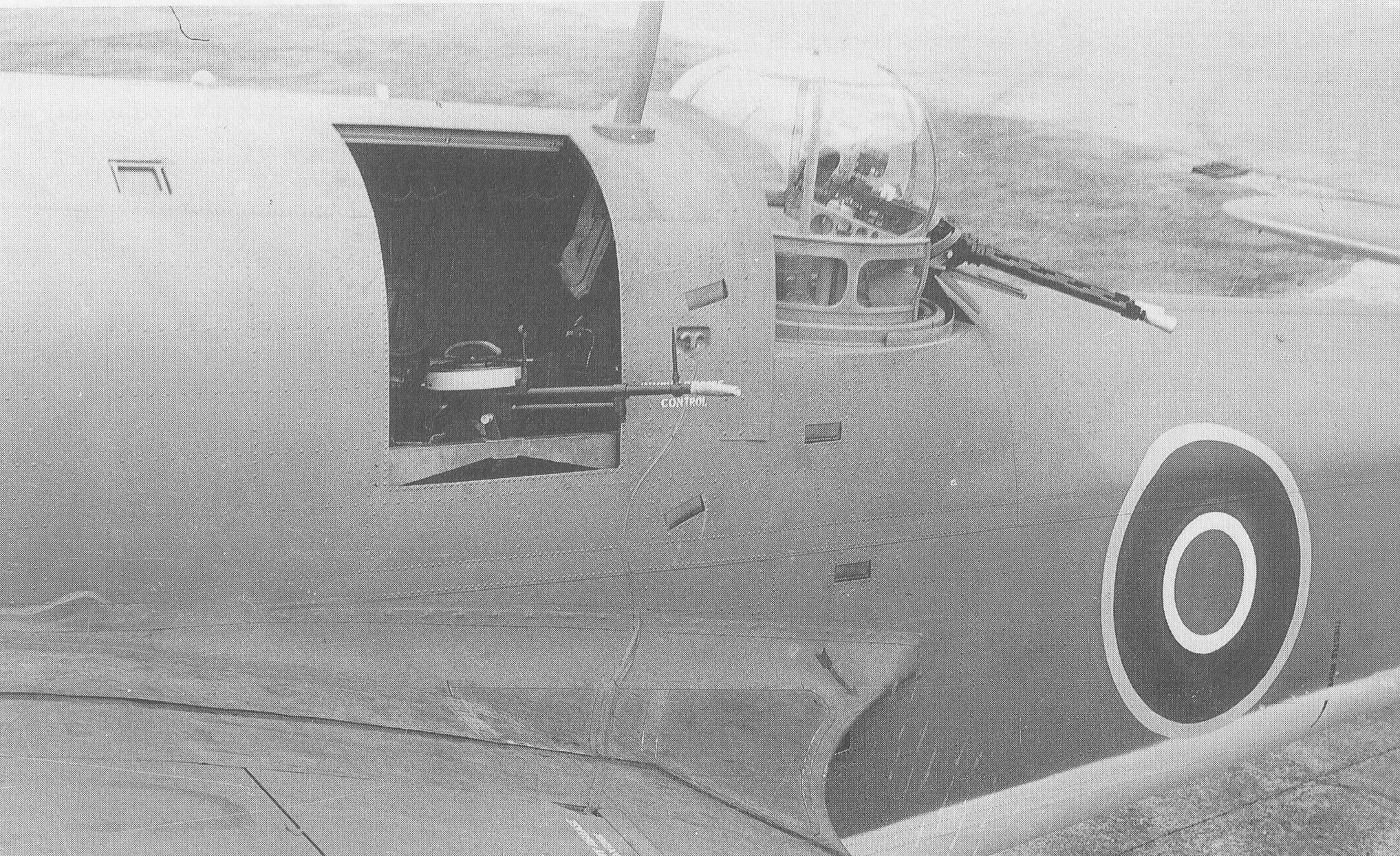
To preserve range, Coastal Command limited the Beaufort’s maximum weapons load to 2,200 lb (998 kg): either a torpedo, or a 1,650 lb (748 kg) magnetic mine, or conventional bombs, sometimes supplemented by anti-submarine bombs carried under the wings. Defensive armament centred on the electrically driven rear turret, which could traverse through 180°. It generally carried two .303 in (7.7 mm) Browning machine guns, but after the first combats over France in May 1940 many aircraft also received an additional Vickers or Browning of the same calibre firing from beam positions on either side of the fuselage just ahead of the turret. In 1941 the turret was modified to traverse through 200°, and the Beaufort’s armament went through a number of configurations during the war, sometimes including a chin gun position to counter head-on attacks by German fighters. ASV radar would only be fitted from late 1941 onwards.
The Gneisenau Mauled
From the outbreak of war, Coastal Command undertook anti-shipping and ASW operations in the Channel and North Sea, but its Anson and Hudson aircraft clearly lacked effectiveness. When Beauforts were delivered to No. 22 Squadron at Thorney Island (between Portsmouth and Brighton) in December 1939, the improvement was so striking that the RAF soon hailed the type as “the fastest torpedo-bomber in the world.” No. 42 Squadron received its Beauforts in April 1940, followed by No. 217 Squadron in May. Sorties followed in quick succession: anti-shipping patrols, magnetic mine-laying, and raids on port installations in France and Germany.
The first torpedo attack took place on 11 September 1940, when five aircraft of No. 22 Squadron attacked a convoy of three merchant vessels off Ostend, damaging one. The first ship to be sunk by a Beaufort-dropped torpedo was the freighter Johann Blumenthal, hit during a night raid on Cherbourg on 17 September. Two more ships would be destroyed by torpedoes before the end of the year, and three others by mines laid by Beauforts. One of their greatest successes, however, came the previous May.
Since 15 April, No. 22 Squadron had been flying regular mine-laying operations from England’s east coast into the Elbe estuary. On the morning of 5 May, the German battleship Gneisenau left Bremerhaven to take the Kiel Canal to the Baltic. Steaming at 22 knots, she had just entered the estuary when a magnetic mine detonated some 20 m off her port beam. The damage was serious but not fatal: several compartments flooded, one turbine had to be shut down, and the aft rangefinders were put out of action. With a slight list of half a degree to port, the battleship reached Kiel, where she had to enter dry dock for repairs that would keep her out of action until 21 May.
It was a notable success for the Beauforts, which at that time divided most of their effort between mine-laying off enemy ports and armed reconnaissance “Rovers”: patrols by two or three aircraft that attacked any worthwhile naval target of opportunity.
The Scharnhorst Bombed but Unscathed
On 8 June, the Royal Navy learned too late that the Scharnhorst and Gneisenau had sunk the carrier HMS Glorious and two escorting destroyers off Norway with complete impunity. Impunity, but not without damage: one of the destroyers had managed to hit the Scharnhorst with a torpedo, forcing her to put into Trondheim for repairs. She was spotted there two days later by a Coastal Command reconnaissance aircraft, and the British launched two air raids with Hudsons and carrier-borne Skua dive-bombers. These types were under-powered, and the German battleship was well protected by fighters, so the Scharnhorst was able to sail again on 21 June without further damage.

The RAF then mounted a final attack in two waves, one of six Swordfish, the other of nine Beauforts. The latter, from No. 42 Squadron, were armed for the occasion with 500 lb (227 kg) semi-armour-piercing bombs. They took off from Wick in northern Scotland at 14:20 and covered 300 nautical miles. Flying in sections of three at 1,000 ft (300 m) altitude in clear weather, they had no escort, the available fighters lacking the range to accompany them. On reaching the Norwegian coast, the formation climbed to 6,000 ft. At 16:00 they easily spotted the Scharnhorst and her escort group (two destroyers and four torpedo boats), under close cover by six Bf 109s circling continuously overhead.
The Beauforts dived in three waves from starboard, first at about 10° then at 40°, while the battleship zigzagged hard to throw off their aim. The escorts promptly deployed in a defensive arc around the capital ship to counter any torpedo attack, and the heavy and medium A/A guns opened fire with 3.7 cm and 10.5 cm weapons. None of the Beauforts was irretrievably hit at this stage and all dropped their bombs from around 1,500 ft (450 m) before breaking away at wave-top height. None of the bombs found its mark.
It was then that the Messerschmitts intervened. One fighter was shot down, but the Beauforts lost three aircraft in the ensuing melee. The attack revealed serious flaws in squadron tactics: the crews had relied on their combined firepower rather than the aircraft’s agility to punch through the Bf 109 screen. The Beauforts of No. 42 Squadron were not yet equipped with beam guns, and several rear turrets experienced rotation problems in combat due to poor ammunition-rack layout; in other cases the guns jammed at the worst possible moment.
The first lessons learned were unambiguous, and the Beaufort squadrons set about improving what they could. The aircraft were systematically re-engined, armed with four machine guns, given extra armour, and flown by increasingly experienced pilots. No. 22 Squadron soon displayed much greater aggressiveness, scoring numerous successful torpedo attacks, notably on the tanker Ill on 18 September 1940, the Sperrbrecher 17 Templar on 27 December, and a large cargo ship on 26 March 1941.
To be continued in Part 2.
 | A guest post by
|